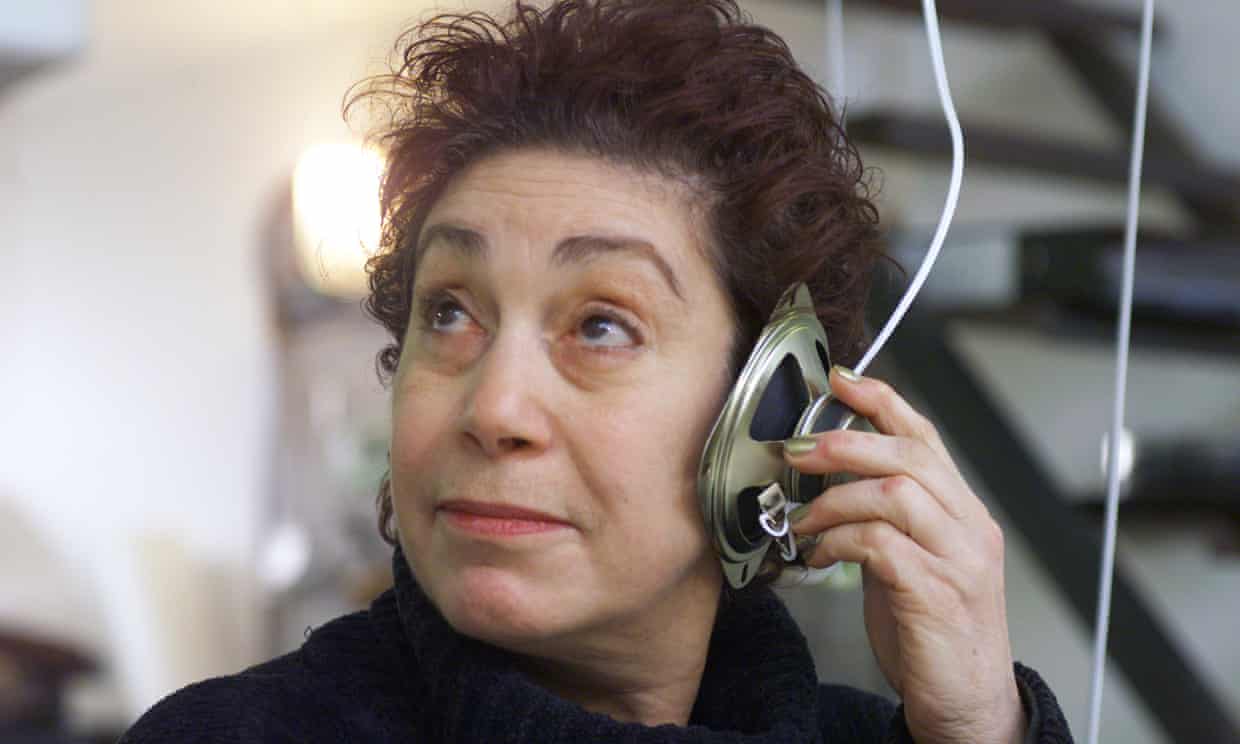
A new low in mansplaining – menopause as a metaphor for a failing economy
No offence to my employers, but the continued absence of a menopause cry space, as recently pioneered by Notts police, has not gone unnoticed.
Nor – now that a Bank of England official reminds middle-aged women of our extraordinary similarity to once-productive economies, doomed to pitiable decline – have I witnessed any of the workplace menopause openness advocated by the chief medical officer, Sally Davies, such as the taboo-defying “M” for menopause badges. Or “C” for climacteric, as the menopause is known to clinicians, Germaine Greer and, we now discover, the deputy governor of the Bank of England.
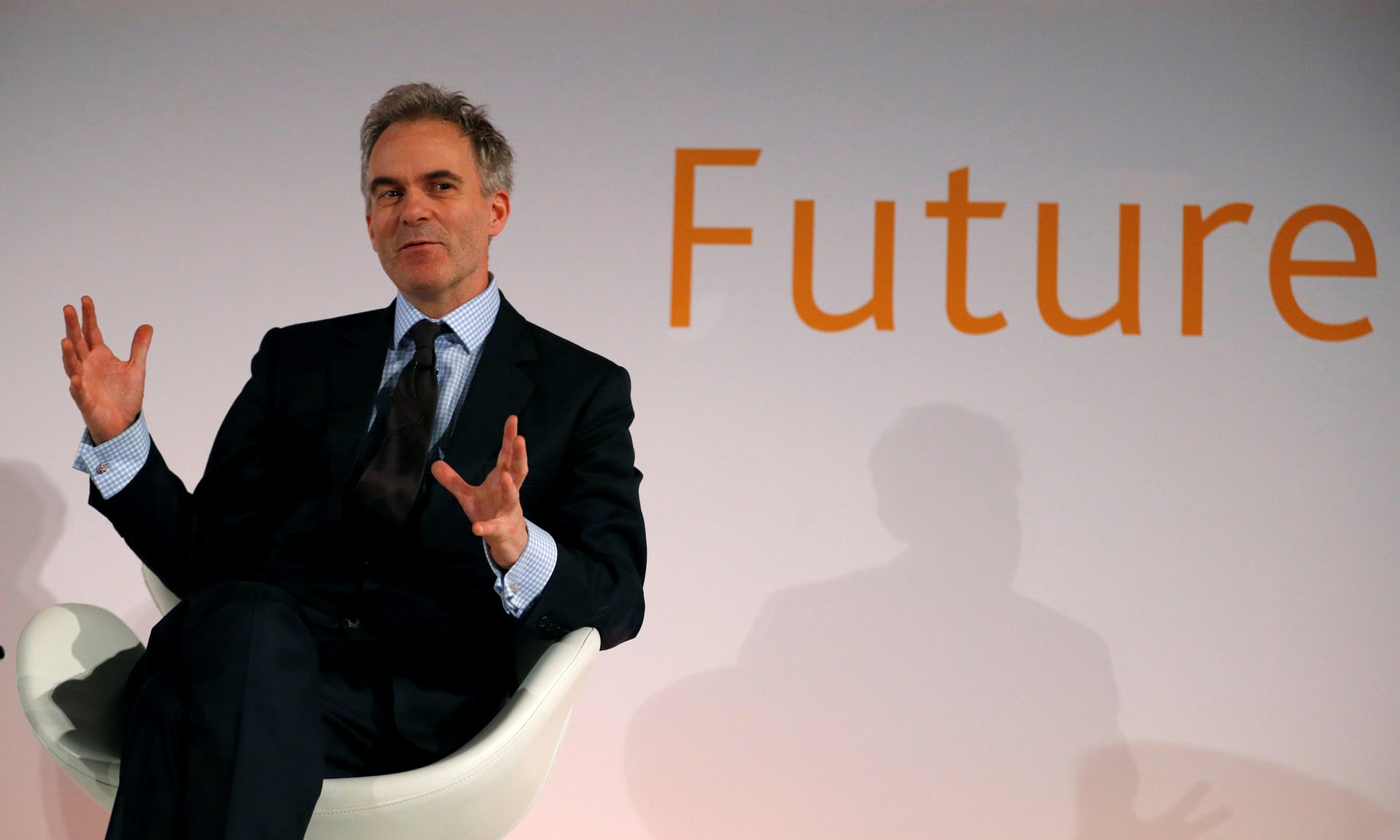
In an interview that will long be a topic in my bespoke, home cry space, Ben Broadbent told the Daily Telegraph that the British economy is “menopausal”. That means, he elaborated, “you’re past your productive peak, you’re no longer potent”.
City analysts fluent in gynaecology/economy parallels would have immediately spotted, looking on the bright side, that Dr Broadbent neither ruled out HRT nor resorted to similes featuring fibroids, stress incontinence or vaginal mesh.
Actually, a ‘menopausal’ economy would be more productive | Jayne-Anne Gadhia
But to those unable to interpret Mr Broadbent’s choice of words as anything other than a rare combination of idiocy and unabashed misogyny, he could only, after protests, apologise. Even at the BBC, renowned for its efficiency in purging middle-aged women, most men can be relied on to pretend ignorance of the system. At the Bank of England, colleagues have been tasked, recently, with attributing its massive 25% gender pay gap to the mysterious absence of senior women. Anyway, perhaps Broadbent’s apology will entice more of these failing organisms on board. “I was explaining,” he said, “the meaning of the word climacteric.”
Thoughtful of you, Ben. Though maybe, next time, look it up? So as not to conflate the word’s medical definition with climacteric’s primary meaning, in literature unrelated to biology, as a critical moment or period? Rather than explain further, why don’t we substitute “menopause” for “climacteric” in academic titles where Mr Broadbent believes a biological comparator to be involved? For instance: “The menopause of the 1890s: a study in the expanding economy.” And: “Was 19th-century British growth steam-powered?: The menopause revisited.” Similarly: “‘The menopause event in our history’: aspects of Burke’s reception in France.”
The Bank of England has recently attributed its massive 25% gender pay gap to the absence of senior women
If, for reasons at which we can only guess, the menopause has become Broadbent’s go-to stagnation metaphor, it is only fair to point out that distaste for women near their own age is shared by many of his middle-aged peers. Look, for instance, at the writing of Rod Liddle or Tony Blair (“the good matrons of the Women’s Institute”); at the 20-year age difference preferred by men who can afford it, when they trade in a climacteric-damaged partner.
Naturally, so soon after Toby Young’s surrender of an academic appointment (following exposure of his tweets about women’s “knockers”), and amid the general resentment resulting from #MeToo, Broadbent’s humiliation immediately earned him a place, alongside St Toby of the Tits, in the pantheon of political correctness martyrs. “Did bank boss HAVE to apologise?”, the Mail demanded, of the “PC brigade”. “He was simply using a metaphor.”
The Telegraph, having used that innocent metaphor for its headline, now protested the reaction with all the indignation of a tweeting Trump, when he blames the recoil from his own obscenities on “politically correct fools”. Broadbent, the Telegraph said, had been unfairly “hounded” by a “self-appointed Inquisition ready to jump on well-meaning if infelicitous comments”.
A new low in mansplaining – menopause as a metaphor for a failing economy

Karen Finch obituary
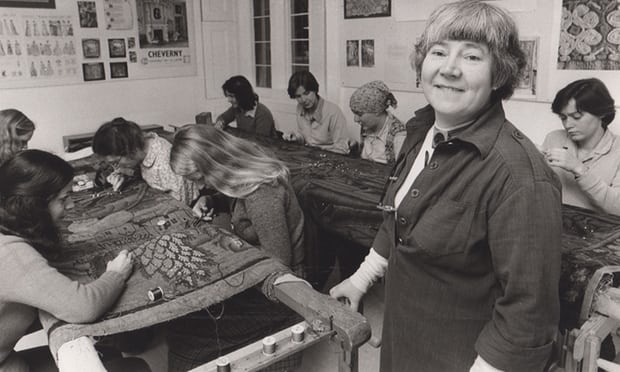
Karen Finch, who has died aged 96, was a master weaver before becoming a conservator and, in 1975, founded the Textile Conservation Centre for professional conservation training and research. Housed initially at Hampton Court palace, the centre moved to Winchester in 1997 to Britain’s first purpose-designed conservation facility. When this was closed in 2009, a successor body was created, the Centre for Textile Conservation and Technical Art History at the University of Glasgow.
Under her leadership, the TCC was a magical place, filled with the quiet hum of intense activity, where professional and trainee conservators worked together on national treasures. Students, always an international lot, went on to work and teach in museums, archives, historic houses and conservation units around the world: those from my group alone in Amsterdam, Athens, Edinburgh, Manchester, New York and Toronto.
Karen retired as the centre’s principal in 1986, but continued to speak at international conferences, to translate papers, correspond with museum colleagues, participate in learned societies and mentor mid-career colleagues. She maintained this pace into her 80s.
Born on a farm in Rødding, Denmark, daughter of Soren Møller and Ellen Sinding, Karen grew up in a communal way of life. She went to art school in Copenhagen, where she joined the circle of the designer Kaare Klint, absorbing the principles that made Danish modern style. The wartime occupation of Denmark, with all its restrictions, made the art school intensely committed to freedom. Never would Karen tolerate the lesser treatment of any person.
Karen met an English soldier, Norman Finch, who had arrived with the allied liberation forces, and after they married in 1946, the couple moved to London. There Karen found work restoring textiles at the Royal School of Needlework, and later at the Victoria and Albert Museum, where she experimented to develop new techniques of textile cleaning.
Unhappy with the division of manual workers from curatorial staff, she left in 1959 to set up her own workroom. There she brought together ethics, scientific methods, historical understanding and craft knowledge. With her growing reputation, important commissions flowed in, along with young people eager to learn textile conservation skills. Her education goals led to a collaboration with the Courtauld Institute for a postgraduate diploma in textile conservation from 1973, where she was able to fully professionalise textile conservation in line with other disciplines. In 1976, Karen was appointed OBE.
Norman died in 1996. Karen is survived by her daughter, Katrina, two grandsons, Joshua and Jacob, and her siblings, Steen, Greta, Ruth and Inge.
The sound of mega orgasms: the female composers taking music into intimate places

In the early 1990s, the accordionist and musical improviser Pauline Oliveros wrote the soundtrack for a feminist porn film called The Sluts and Goddesses Video Workshop. The film is presented and co-directed by Annie Sprinkle, a sex worker turned academic whose lecture covers everything from deep breathing and vaginal bling to STD prevention and “mega orgasms”. Along the way, we get a spectacular sonic counterpart of drones, glitches, bleeps, twangs and pulsations.
Conventional porn music this is not: no sultry saxophones, no oily bass guitars. Instead, Oliveros made sounds that are fun, tactile and inquisitive. If Sprinkle’s mission was to confront industry standards of what erotic looks like, freeing viewers to define their own tastes, Oliveros reminded us that the power to decide what music means should ultimately belong to the listener.
This autumn, in the wake of the allegations against Harvey Weinstein and others, a couple of things became urgently clear. We must listen more carefully to women’s voices, and we must change the power structures that govern much of public and private life, including the arts.
“Pauline was empowering her listeners,” says the writer Ione, the late Oliveros’s partner and regular collaborator. “Sluts and Goddesses was not pornography, not if you mean the word in any pejorative or sleazy sense. It was about sexual freedom, showing that sexuality is a natural and wonderful thing for women. The sounds Pauline made were deeply sensual because they related to the body. Her music was always about the Earth, the body, being human, the cosmos.”
The film gets a rare public screening this week at the London contemporary music festival, in a section termed (brace yourself) New Intimacy. Contemporary music has a long and tetchy history of labels, schools and isms, almost all coined by programmers or academics rather than artists themselves. New Intimacy seems a cheeky throwback to the contentiously named New Complexity and New Simplicity movements of the 1980s.
There is a particular irony to the “new” bit, given several of the works at LCMF are three or four decades old. But what about the “intimacy”? “Modernism was about removing the body from art,” says festival director Igor Toronyi-Lalic. “About removing personal identity and prioritising science, abstraction and objectivity. With postmodernism, the body is reinserted into feminist art, queer theory. That is what’s at the heart of the New Intimacy movement.”
The series includes a work by Kajsa Magnarsson “for strap-on and electric guitar”; a piece by Claudia Molitor to be performed by audience members within their own mouths as they chew sweets, popcorn and crisps; and the 1965 film Fuses, in which Carolee Schneemann documents the most intimate moments of her relationship with composer James Tenney. Also in the mix is the pristine and ultra-sparse Second String Quartet by Wandelweiser composer Jürg Frey – music so stripped back and delicate it can start to feel febrile, like the tender stuff left exposed after some kind of sonic disrobing. Aesthetically, it’s probably the diametric opposite to the sparkly dildos and nipple tassels of the film, but maybe the point is how these works share a potential to empower and turn the attention back on audiences.
Claudia Molitor has been exploring the haptic in music for nearly two decades, and welcomes the wide scope of New Intimacy. “It’s a provocation, right? Most of the time, women aren’t supposed to express ourselves in certain ways because it’s considered unbecoming, so maybe it’s good to put something out there that is unbecoming. If it makes people uncomfortable, that’s all right. A lot of women spend quite a lot of their lives feeling uncomfortable. Anyway, it’s hardly new. Mozart said it with Cosi Fan Tutte: women have the same desires as men.”
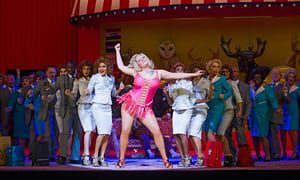
Composer and performance artist Jennifer Walshe likewise uses her work to deal with gender and identity. Her confrontational 2003 music theatre piece, XXX Live Nude Girls, featured Barbie dolls in all manner of sexual positions and scenarios of abuse. “If you want to privilege the female gaze,” she says, “you have to privilege it at every level of production, right down to technical crews. Think of an opera like Anna Nicole.” This was a work by Mark-Anthony Turnage, about the Playboy star Anna Nicole Smith. “The librettist is a man, the composer is a man, the director was a man. Why aren’t women allowed to write their own stories?”
Walshe also questions the potential in New Intimacy for exploitation or plain voyeurism. “Sometimes I feel that women are forced into a position where they are only permitted to have a voice by articulating their most intimate details,” she says. “Memoirs by musicians like Viv Albertine, Kim Gordon, Carrie Brownstein, Kristin Hersh – all of which are books I love – get very deep into the personal in a way many memoirs by male musicians don’t.
From glossies to gal-dem: the websites revolutionising women’s media
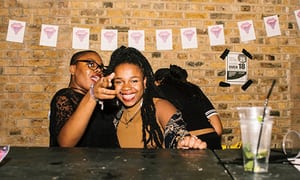
Over the past decade, the women’s magazine has undergone a radical makeover. While 00s glossies consisted largely of insidious bodyshaming and bankrupting shoe recommendations, in recent years female-centric journalism has migrated online, simultaneously shifting its gaze to social justice, mental health and the hitherto hidden realities of womanhood. It has not always been a smooth transition: last week, the online women’s magazine the Debrief announced its closure, with its parent company, Bauer Media, deciding to refocus resources into its print product Grazia. Last year, Sarah Millican’s Standard Issue shut, while US website the Hairpin followed suit in January. Yet a host of other publications remain committed to doing things differently. Here, the women behind London-based site gal-dem and Mille World, an online magazine aimed at Arab readers, explain why they are determined to reimagine the women’s magazine as a force for positive change. RA
Sofia Guellaty launched Mille World out of frustration that it did not already exist. She was looking for a publication that engaged with what it meant to be a young Arab woman. Versace, Dior, Calvin Klein and Chanel were sending hijabs down their runways, but who was catering to the savvy, cosmopolitan Arab women looking to reclaim the Arab narrative for an educated Arab audience? It turned out no one was, so Guellaty decided to.
Educated in Paris, but born and now based in Tunis, the capital of Tunisia, 35-year-old Guellaty was at the helm of Condé Nast’s first Middle East launch, the now-closed Style.com/Arabia, two years ago. “I kept hearing about things being ‘good enough’ for the Arab market. That really got to me, this ‘good enough’ attitude. Two things: one, it’s not good enough, what you’re doing is crap. Two, it’s racist,” Guellaty says. Two years ago, she quit Condé Nast; last May she became pregnant with her first child. It was during her pregnancy that she developed the idea for Mille World. After giving birth, she recruited the first members of the board, which now includes Saudi princess Reema bint Bandar al-Saud and Saif Mahdhi, the president of Next Models. She recruited the company’s CEO, Nez Gebreel, from the Dubai Design and Fashion Council. It was crucial to Guellaty that her executive and editorial team were Arabs and leaders in their field.
“Because of colonisation – whether it’s real, as with Tunisia and France, Egypt and the UK, or whether it’s cultural supremacy – [Arab readers] tend to be like: ‘If a white guy did it, it must be good.’ I wanted to change that. I wanted the whole team to be Arab, which never happens. At the big fashion titles, like Harper’s Bazaar, Vogue, there’s not one Arab there – maybe there’s an Arab assistant,” she says. “They write articles about ‘Oriental fashion’ being on the rise. We write about decolonising beauty standards. We’re very now. They’re very yesterday.”
Mille World launched in January and already has 40,000 unique visitors a month. Its readers come from across the Arab world and diaspora, Saudi Arabia, the UAE, Lebanon, Egypt, France, the UK and the US. Its 12-person editorial staff is equally international, based in Dubai, London, Paris and Tunis. The deputy editor, Samira Larouci, 28, has lived in Dalston, London, for years, but she was raised in “very, very white” Chichester by her Moroccan parents. She left i-D magazine in July, having helped set up its luxury lifestyle site, Amuse. She was put in touch with Guellaty by a mutual friend. Their first phone call lasted two and a half hours. “We were talking about Arab identity issues; I’ve always been seeking a community of my own to connect with. We both agreed there was a voice missing that we wanted to hear. It was young, inclusive and not based around materialism,” Larouci says. “We wanted to address that need. It’s almost laughable no one’s done it before.”
There was a voice missing: young, inclusive and not based on materialism
Larouci now commissions and edits the bulk of the site’s editorial content – 60 pieces a month, every one of which is translated into English, French and Arabic. She is interested particularly in Arab counterculture and championing Arab artists who do not have any other platform in their region. “The reader I want to reach is someone studying in Washington, raised in Saudi, who’s in a sort of cultural limbo. That’s where I come from. I want to find those people in LA who are interested in feminism in the Arab world,” Larouci says.
All this is only financially possible thanks to Mille World’s consultancy wing, which translates its connection with the Arab market into campaign advice for massive brands such as LVMH, Ralph Lauren and Converse. As Mille World’s promotional material points out, 40% of people living in the Arab world are millennials with higher spending power than their peers everywhere else, including in the US.
“Our generation is the highest-spending generation in history, but it’s also woke. [The big brands] are realising they need to rethink,” Guellaty says. “Mille World is my playground and I’ll write what I want there. If this Gucci bag sucks, it sucks and it’ll never see the light of day on my website. But if you want help on a Gucci campaign? Yeah, for sure,” she says. “What I want is a generation-defining media, something like what Jefferson Hack did with Dazed and Another Magazine. It’s like, here is a media through which I can understand the world I’m in, something that inspires me within my own identity.” PG
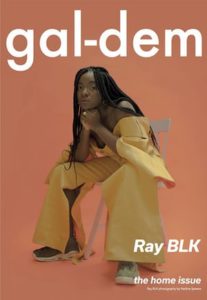
Deep in the belly of a south London car park lie the offices of gal-dem, an online magazine produced exclusively by women and non-binary people of colour. It is not big – each of the work studios in Peckham Levels has been converted from a single parking space – but it is significant. By parsing culture and current affairs through a prism of intersectional feminism, covering topics from Grenfell to mooncups, gal-dem is one of the publications changing the face of female-focused media.
Liv Little was halfway through a politics and sociology degree at the University of Bristol when she founded gal-dem and the site’s ethos sprang directly from her studies. “The issues that I was really interested in politically were the specific, nuanced ways that women are affected by legislation in this country,” she says. “So I did a lot of campaigning and research around women seeking asylum in the UK and Yarl’s Wood [immigration centre] and how types of violence which they would fall victim to were gendered.” In doing so, Little observed “a lack of understanding of a different type of experience” faced by women – especially women of colour – and a gap in the market for a site that could tell their stories.
As a concept, gal-dem is a world away from the blinkered women’s glossies available to the editorial team in their youth. While those magazines shared some women’s stories, the scope was narrow, and much of the content was designed to reaffirm strict beauty standards. gal-dem, meanwhile, has no such agenda, aiming to provide women with just one thing: a voice. In this sense, the site is part of a much broader cultural shift in women’s media – one that has seen print titles fail (recent casualties include Company, She, Glamour, Bliss and Sugar) and a new breed of online magazine take their place. Riding the fourth wave of feminism, publications such as The Pool and Refinery 29 are fuelled not by materialism, but by a rich seam of untapped subject matter: the experiences women have long been told to keep quiet.
While the gal-dem team acknowledge their position in the wider landscape of newly feminist media, they are careful to distinguish themselves from their peers. “There is a tendency within feminism for its face to be quite white and middle-class,” says Little. “To see an editorial team comprising women of colour is a rarity; I think that is clearly our point of difference.” From her desk in the gal-dem offices, the deputy editor – and Guardian contributor – Charlie Brinkhurst-Cuff explains how the focus on issues that affect women of colour manifests itself in gal-dem’s attitude. “The tone in general is a bit more serious than the Refinerys and Bustles; we don’t have that ‘you’re talking to your best friend’ thing going on,” she says. “The nature of the topics we’re talking about a lot of the time don’t really lend themselves to that and we don’t want to ever dilute that seriousness.”
Slowly, gal-dem’s efforts to rectify a lack of representation are being echoed by the mainstream media – with decidedly mixed results. Since he took over six months ago, the Vogue editor Edward Enninful has managed to include five women of colour on his covers (February’s Vogue featured Little in a spread about “the new suffragettes”), yet glossies are still regularly derided for their treatment of black women. In November, the actor Lupita Nyong’o expressed her disappointment at Grazia’s decision to photoshop away her natural hair on its cover; the previous month, the Evening Standard’s magazine caused much consternation by airbrushing Solange’s braids. And just because online magazines tend to avoid scandal, that does not mean they are necessarily much better, Brinkhurst-Cuff says. “It would be more hidden if there was an issue online, because you don’t have the physical print cover to see. We can say Alexandra Shulman only published 12 black women on the cover, whereas if an online publication is pretty much exclusively publishing white writers or using stock images of white women you’re arguably less likely to pick up on that.” That said, she sees the new online media “struggling towards intersectionality, for the right or wrong reasons. Diversity is in fashion right now, but we hope it’s not always about money.”
Money, however, is something gal-dem is beginning to consider seriously. Until now, it has been a voluntary organisation. Nobody gets paid, apart from contributors on specific brand collaborations; the annual print issue, the covers of which hang from the office’s chipboard walls, is more passion project than money-maker. But as the site has grown – gal-dem receives “anything from 4,000 to 20,000 unique visitors a day”, according to Little – the team believe it is turning into an economically viable enterprise. Little has just stopped working full-time and the team are developing a business plan.
It is still early days for the new breed of women’s magazine and the economic forecast remains uncertain – but, in terms of broadening the scope for women’s media, the legacy of gal-dem and its peers already seems indelible. RA
The Pool
Aimed at the time-stretched woman, this online magazine from Lauren Laverne and former Red editor Sam Baker focuses on snackable content – its intimate personal essays and practical advice are all stamped with an average reading time.Man Repeller
Initially a blog documenting Leandra Medine’s love of ugly and offbeat fashion, Man Repeller now also publishes smart, funny and moving pieces on everything from ghosting to antidepressants.Broadly
“For women who know their place” runs the tagline to Vice’s women-focused channel, which covers feminist issues with an emphasis on reportage.Burnt Roti
On Londoner Sharan Dhaliwal’s lifestyle site, writers of south Asian heritage discuss topics including bereavement and menstruation.
Reni Eddo-Lodge polemic tops poll of most influential books by women
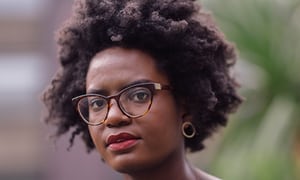
Reni Eddo-Lodge’s book Why I’m No Longer Talking to White People About Race has been named the most influential book written by a woman. The 2017 book bested titles including Mary Wollstonecraft’s A Vindication of the Rights of Woman and Germaine Greer’s The Female Eunuch.
Academics, booksellers and publishers curated a list of the “Top 10 books by women that changed the world”, which was voted on by members of the public. Titles on the list range from Eddo-Lodge’s polemic on race to Virginia Woolf’s A Room of One’s Own and Anne Frank’s The Diary of a Young Girl. Eddo-Lodge’s book, which won the the Jhalak prize for the best book by a British writer of colour, received 12% of the public vote.
Other books on the list included Simone de Beauvoir’s The Second Sex, Rachel Carson’s Silent Spring, Maya Angelou’s I Know Why the Caged Bird Sings, Mary Shelley’s Frankenstein and Charlotte Brontë’s Jane Eyre, was conducted for Academic book week.
Eddo-Lodge said her win was “an honour”.
“My book, less than a year old, is a baby compared to the titans and bona fide classics on this shortlist,” she said. “In fact, we need a few more years to determine if it’s really changed the world. However, I will respect this public vote. Thank you to all who voted for Why I’m No Longer Talking to White People About Race. I hope it instigates world-changing passion in my readers.”
Eddo-Lodge’s book is a confrontation of racism in Britain, which she says is a country “still profoundly uncomfortable with race and difference”. The book “couldn’t be more timely”, said Alan Staton of the Booksellers Association, which runs the annual celebration of academic books.
“Issues of race and class, which too many of our political leaders and commentators are wilfully or unconsciously simply not attuned to, have made their way to the top of the news agenda – often through tragic and shameful circumstances,” he said. “The strength of the public reception to Why I’m No Longer Talking to White People About Race – the type of book that ignites campus debate – and the fact that it has topped this Academic book week poll, offers encouragement that there are large numbers of readers willing to intelligently engage with these issues.”
Dame Daphne Sheldrick obituary
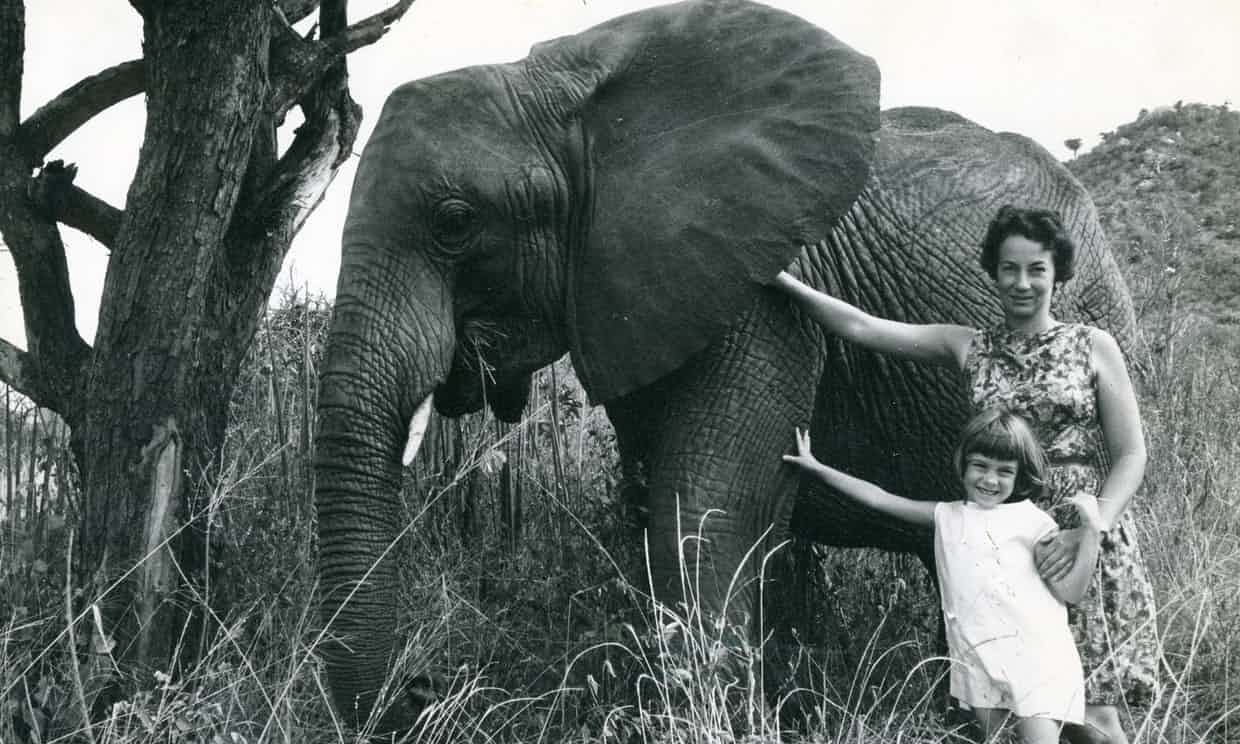
Elephant babies like coconut oil. This discovery has saved the life of hundreds of orphaned, unweaned elephants, left behind when their mothers were killed, victims of the ivory wars that have catastrophically reduced elephant populations across Africa.
The discovery came after two decades of efforts by the renowned conservationist Daphne Sheldrick, who has died aged 83. She devoted most of her life to rescuing young elephants and releasing them back into the wild.
When she first made attempts to keep the orphaned babies alive, often at one or two years old, with other milk sources, they remained malnourished and faded into death. It was only after trying every combination she could find that she hit on one baby milk formula from Europe, which contained coconut oil, that seemed to work. She and the elephants never looked back, and now more than 230 elephants in Kenya, and many others in Asia and other parts of Africa, are alive, and mostly in the wild, thanks to her hand-rearing.
Her work grew from her care of orphaned elephants found by her husband, David Sheldrick, chief warden at the Tsavo National Park in Kenya in the 1960s. By the time her sanctuary was well-established, in the late 70s and 80s, each elephant had its own stall, as otherwise they would disturb one another, was bottle-fed every three hours, and was given blankets, raincoats and sunscreen as needed. A keeper slept with each animal under a year old, alternating lest the babies grow too dependent.
Often, the elephants arrived traumatised, having experienced the lethal violence and cruelty of poaching. It was crucial, in her view, to recognise their grief and help them to overcome it. “They are emotionally human animals,” she told journalists. “You have to think in human terms. How does a child feel when it has lost its whole family and is suddenly in the hands of the enemy?”
Throughout her life, Sheldrick championed the ability of elephants to communicate and their capacity for feeling. Once, she recounted, a female wrenched the tusks from a newly killed bull elephant and threw them into the jungle, before the eyes of the poachers. On another occasion, an elephant she approached in the wild, mistaking it for one of her former charges, ran at her and hurled her into the air. When she landed, leg broken, the elephant approached again and she feared a fatal blow. But instead it carefully examined her with its trunk, nuzzling and testing to see if she could stand. She wrote afterwards she believed it was because she had been recognised as a friend.
Scientists began to understand in the 60s that elephants could use infrasonic frequencies, from about 1Hz to 20Hz, heard by humans as “rumbling”, to communicate over long distances, but only gradually has the full extent of this powerful form of communication been understood. In 2012, for example, researchers found that elephants produce and use their sounds in a similar way to human speech or singing.
Sheldrick was one of the earliest advocates of a total global ban on ivory, as against the halfway house solutions proposed by some of allowing sales of ivory captured from poachers to be sold to benefit the countries that had caught them. And she was forthright about where the problem lay: China, with its rampant demand for ivory trinkets as status symbols. “The world has got to drive China to ban all sales of ivory,” she said.
She was born the third of four children, in Kenya’s Rift Valley, where her parents Marjorie (nee Webb) and Brian Jenkins farmed. Her family, originally from Britain, had come to Kenya after settling in South Africa in the late 19th century. From an early age, Daphne was fascinated by wildlife: aged three, her first pet was a young bush buck. She was educated at Kenya high school but instead of taking up an offered place at university, at 19 she married Bill Woodley, a game warden in Nairobi National Park, with whom she had a daughter, Jill.
The Mau Mau insurrection followed, during which Bill was engaged on the government side, and later they went to live in Tsavo National Park. There, Daphne had a life-changing encounter with the charismatic Sheldrick, the first chief warden of Tsavo and one of the main figures who shaped it as an international beacon of conservation. He too was married but recently separated. Soon after, recognising that her marriage to Bill was over, in 1960 Daphne married David.
Tsavo was one of the first extensive wildlife parks in the world, and a model for many to follow. Sheldrick gloried in the opportunities it offered, making her home a haven for orphaned and abandoned wild creatures from dikdiks to rhinos, and increasingly with baby elephants whose mothers had been killed by poachers.
In 1976, the idyll ended as David was recalled to Nairobi. A year later, he died aged 58 of a heart attack. Bereft, Daphne took solace from the elephants she looked after, later writing: “I thought about the elephants and felt humbled, knowing how stoically they deal with the loss of loved ones on an almost daily basis, how deeply they grieve but how they do so with courage, never forgetting the needs of the living. Their example gave me the strength I needed.”
She set up the David Sheldrick Wildlife Trust in her husband’s memory, and operated her elephant orphanage from Nairobi National Park with outposts in Tsavo.
Sheldrick was made a dame in 2006. She also received one of Kenya’s highest honours, the Moran of the Burning Spear, was named in the UN environment programme’s global 500 roll of honour, recognising outstanding environmental achievers, and was an honorary doctor of Glasgow university. Her autobiography, Love, Life and Elephants: An African Love Story, was published in 2012.
She is survived by her daughters, Jill, from her first marriage, and Angela, from her second, and by four grandchildren.
• Daphne Sheldrick, conservationist, born 4 June 1934; died 12 April 2018
Fashioned from Nature
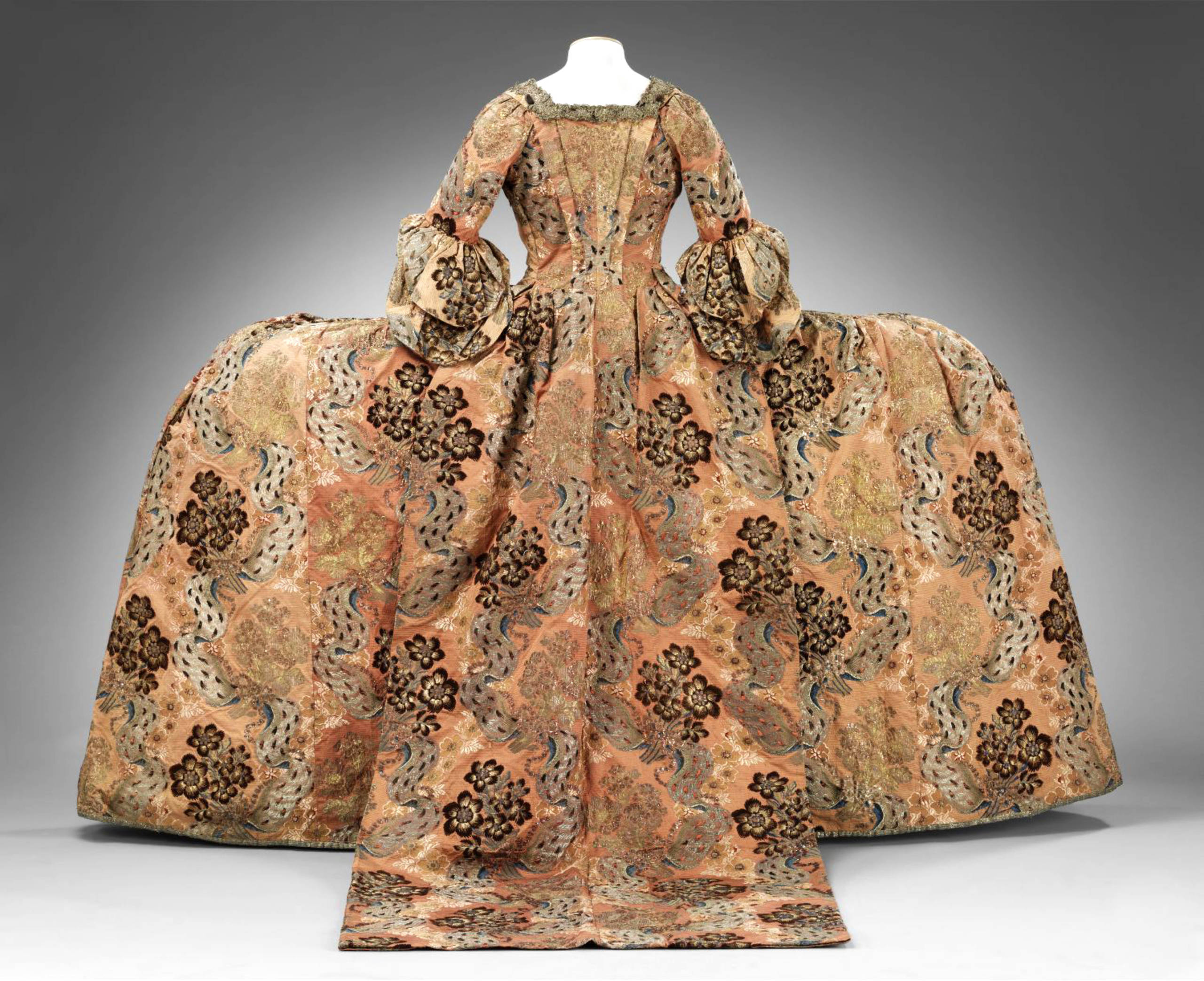
This exhibition will present fashionable dress alongside natural history specimens, innovative new fabrics and dyeing processes, inviting visitors to think about the materials of fashion and the sources of their clothes.
 ‘Clean Up or Die’ man’s ensemble, Katharine Hamnett, 1989, Britain. Ankle boots by Shellys.
Muslin day dress decorated with beetle wing cases, 1868-9, Britain. 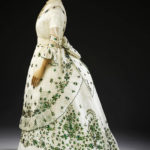
Click here to book tickets and to view original web page at www.vam.ac.uk
Beyoncé Debuted a Whole New Look for Her Second Coachella Performance
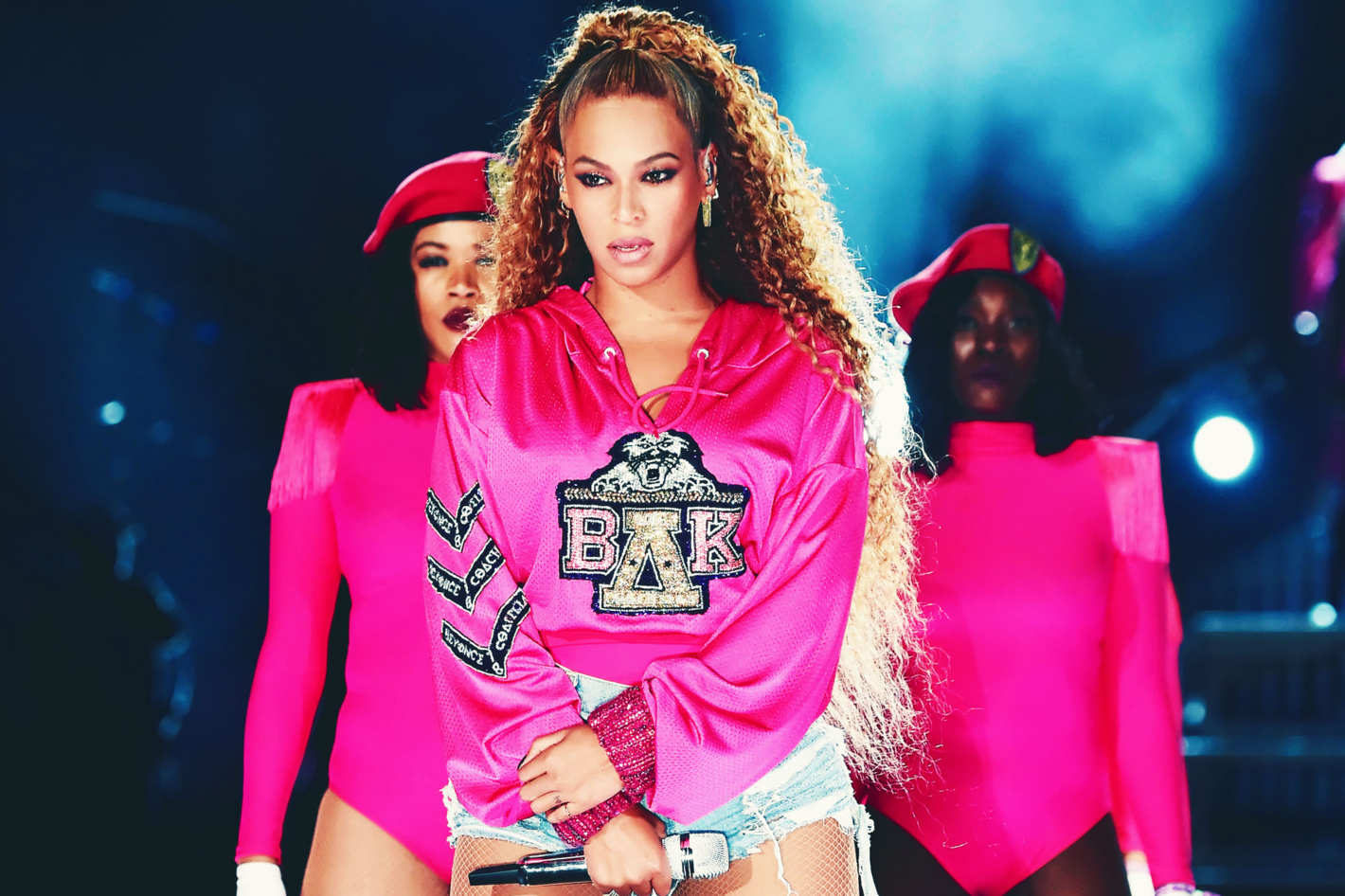
Despite suffering a slight human error on stage, Beyoncé once again dominated the second weekend of Coachella — or, we should say, “Beychella.” While last night’s set was largely the same as her one last weekend, Queen Bey did majorly switch up one feature: her outfits.
Though she stuck with custom Balmain looks designed by Olivier Rousteing (who proudly shared all of Bey’s looks on his Instagram), the Queen swapped out last week’s yellow for hot pink — potentially upsetting for anyone who already invested in the $115 bright-yellow hoodie on the Beychella pop-up shop (but not to worry — you can buy the hot pink version for an additional $115.) She wore the sweatshirt, embellished with “ΒΔΚ,” with the same denim cut-offs and holographic, fringed Christian Louboutin boots she sported the first weekend.
She once again wore a striking Queen Nefertiti-inspired outfit, complete with a crown and floor-length cape, but this weekend’s was silver, as opposed to last week’s black.
… And those boots were later fastened to a matching black bodysuit with garters.
Finally, she and her former Destiny’s Child groupmates traded out last weekend’s Survivor-inspired camo looks for shimmery silver rhinestones.
‘Winning netball gold is a game changer’: Housby basks in surprise win
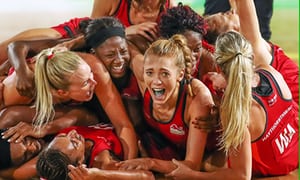
It’s one week on from the sensational last-second goal that could change English netball for ever. Scorer Helen Housby has hardly removed her Commonwealth gold medal. Inside a coffee shop at Sydney’s Olympic park, she passes it over the counter so two baristas can feel the weight. “I’ve worn […]
Tammie Jo Shults was a hero long before she saved lives of 148 people

After one of its engines appeared to explode in midair, a flight from New York to Dallas ended terribly and tragically with the death of a passenger, Jennifer Riordan, who had been partially sucked out of a broken window. The horror is unimaginable.
It’s the nightmarish worst-case scenario that is never supposed to happen, the stuff of disaster movies, not real life. But the pilot of Southwest Airlines flight 1380, Captain Tammie Jo Shults, landed the plane calmly and successfully, on just one engine, at a Philadelphia airport, saving the lives of 148 people. Riordan’s death was awful; the fact that the incident wasn’t even more deadly was extraordinary.
When Captain Chesley Sullenberger brought US Airways Flight 1549 down on to the Hudson river in 2009, after geese took out both engines, he was lauded as a hero. Tom Hanks played him in a Clint Eastwood-directed biopic, Sully, which seems about as all-American an endorsement of courage and bravery as it’s possible to get. Sully offered his approval of Shults last week, and of the teamwork of the flight crew that saved so many lives, although cautioned that, in his experience, the trauma would long outlast any fuss or attention.
Those present recalled that after the plane had landed, Shults walked through the aisle to talk to them, to see how they were doing. One passenger, Alfred Tumlinson, told reporters that he would send the pilot “a Christmas card, I’m going to tell you that, with a gift certificate for getting me on the ground. She was awesome.” News outlets have delved into her life story and it has turned out to be astonishing. Shults was one of the first female fighter pilots in the US Navy and was elite enough to fly an F/A-18 Hornet. She flew training missions as an “enemy pilot” during Operation Desert Storm, as women were then still excluded from combat missions.
A Navy spokesman, Commander Ron Flanders, explained to Time magazine that she helped “male pilots hone their skills”. She left active duty just before restrictions on female pilots entering combat were lifted. If Julia Roberts isn’t already on the phone, I’d be amazed.
When reading about flight 1380, any references to Shults’s gender have seemed to me to be entirely beside the point. When reports have described her as “a female pilot”, I have winced a little, instinctively. It’s the muscle memory that accompanies phrases such as “female comedian” or “female doctor”. She’s a pilot. That’s it. But equally, to learn about her past, in which being a woman made it harder for her to do what she did, makes it worth just a moment of added recognition of her incredible life and career.