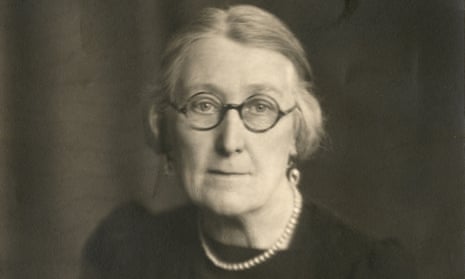
View image in fullscreen Marjory Stephenson was a pioneer in microbiology. Photograph: Royal Society A year-long series of events marks 80 years since admission of Marjory Stephenson and Kathleen Lonsdale in 1945 When Isaac Newton, Charles Darwin and Albert Einstein became fellows of the Royal Society , like other […]
Home Blog
Royal Society Honours Pioneering Women…….Finally
The untold stories of female climbers summiting the world’s tallest peaks
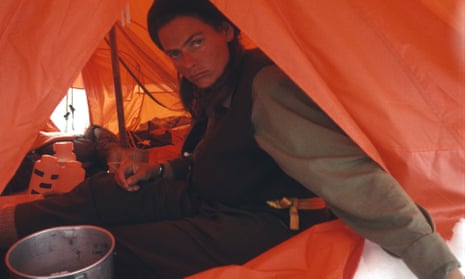
Margaret Young during her climb of Denali. Photograph: Courtesy of Abrams Press In 1970, Alaskan doctor and mountaineer Grace Hoeman led a team of six women in the first all-female attempt to summit Denali – which was the first all-women’s ascent of any of the world’s big peaks. At […]
Trump is unleashing sadism……
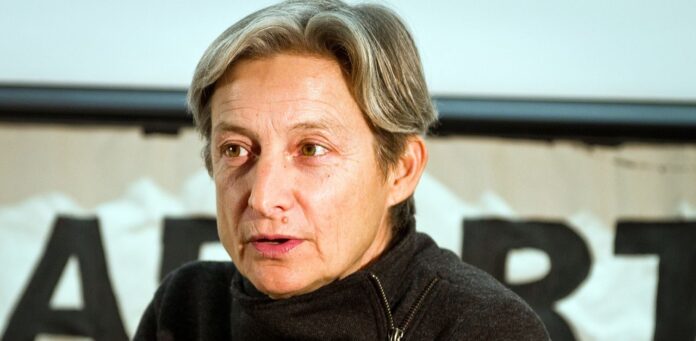
Those who celebrate his defiance and sadism are as claimed by his logic as those who are paralyzed with outrage. – Judith Butler Guardian 6th Feb 2025
As Trump delivers a series of devastating and appalling executive orders and public pronouncements every day, it has never been more important to avoid being captured by his obscenity and focus on how the issues are interconnected.
It is easy to forget or sideline the executive orders of the previous week: bans on diversity, equity and inclusion (DEI) programs and discourse as well as “gender ideology” in all federally funded programing, as new obscenities flood the news cycle. Threats of deportation to international students who engage in legitimate protest; expansionist designs on Panama and Greenland and proposals to take over the total and forcible displacement of Palestinians in Gaza from their land are announced in quick succession. In each case, Trump makes the declaration as a show of power, testing to see whether it can take effect. The executive orders can be stopped by courts, but the deportation of immigrants has already begun, as has the re-opening of the grotesque camps of Guantánamo.
Amassing authoritarian power depends in part on a willingness of the people to believe in the power exercised. In some cases, Trump’s declarations are meant to test the waters, but in other cases, the outrageous claim is its own accomplishment. He defies shame and legal constraints in order to show his capacity to do so, which displays to the world a shameless sadism.
The exhilarations of shameless sadism incite others to celebrate this version of manhood, one that is not only willing to defy the rules and principles that govern democratic life (freedom, equality, justice), but enact these as forms of “liberation” from false ideologies and the constraints of legal obligations. An exhilarated hatred now parades as freedom, while the freedoms for which many of us have struggled for decades are distorted and trammeled as morally repressive “wokeism”.
The sadistic glee at issue here is not just his; it depends on being communicated and widely enjoyed in order to exist – it is a communal and contagious celebration of cruelty. Indeed, the media attention it garners feeds the sadistic spree. It has to be known and seen and heard, this parade of reactionary outrage and defiance. And that is why it is no longer a simple matter of exposing hypocrisy that will serve us now. There is no moral veneer that must be stripped away. No, the public demand for the appearance of morality on the part of the leader is inverted: his followers thrill to the display of his contempt for morality, and share it.
The shameless display of hatred, the contempt for rights, the willingness to strip people of their rights to equality and freedom by banning “gender” and its challenges to the binary system of sex (denying the existence and rights of trans, intersex and non-binary people), destroying DEI programs meant to empower those who have suffered enduring and systemic discrimination; forcible deportations of immigrants, and calls for complete dispossession of those who have survived, traumatized, the genocidal actions in Gaza.
Raphael Lemkin, the Polish-Jewish lawyer who coined the term “genocide”, made clear that it includes “a coordinated plan aimed at destruction of the essential foundations of life of national groups … it may be accomplished by wiping out all basis of personal security, liberty, health and dignity.” Indeed, forcible transfer of children is the fifth punishable act under the genocide convention adopted in 1948.
Not all forms of Trump’s rights-stripping belong to the category of genocide, but many of them express fascist passions. Denying rights to healthcare, legal recognition and rights of expressive freedoms for trans, intersex and non-binary people attacks the very foundations of their lives. Even the conservative supreme court found that discrimination against trans and gender non-conforming people constitutes discrimination on the basis of sex (Bostock v Clayton, 2020).
Hence, it makes no sense to say that trans rights threaten sex-based law: they belong to that law, and ought to be protected by it. Rounding up immigrants from schools and homes, forcibly deporting them to detention centers and ripping away their rights to due process shows not only clear contempt for those communities, but for constitutional democracy itself. The threat to birthright citizenship defies a basic constitutional protection and positions Trump as above constitutional rule and the balance of powers.
If we continue to be gripped with outrage and stilled by stupefaction by each day’s new proclamation, we will fail to discern what links them. To be gripped by his statements is precisely the aim of their utterance. We are in some ways in its thrall when it captures and paralyzes us. While there is every reason to be outraged, we cannot let that outrage flood us and stop our minds. For this is a moment to grasp the fascist passions that fuel this shameless grab for authoritarian powers.
Those who celebrate his defiance and sadism are as claimed by his logic as those who are paralyzed with outrage. Perhaps it is time to stand apart from these passions to see how they work, but also to find passions of our own: the desire for a freedom equally shared; for an equality that makes good on democratic promises; to repair and regenerate the earth’s living processes; to accept and affirm the complexity of our embodied lives; to imagine a world in which government supports health and education for all, where we all live without fear, knowing that our interconnected lives are equally valuable.
• Judith Butler is Distinguished Professor in the Graduate School, UC Berkeley.Butler’s latest book is Who’s Afraid of Gender, published by Farrar, Straus, and Giroux (US) and Penguin(UK).

Melania
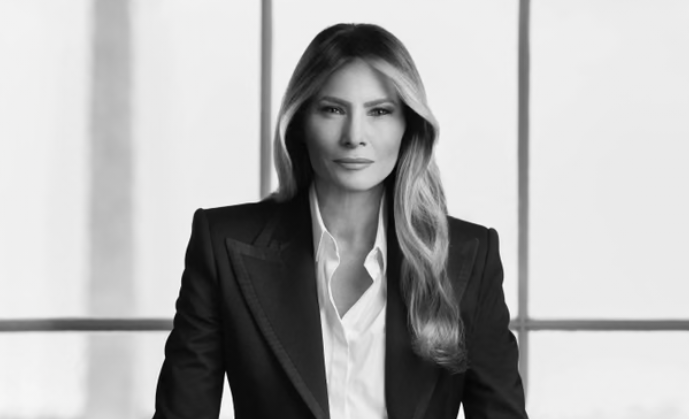
At first glance, the official portrait of the returning Flotus – soft power stance, crisp, unbuttoned Dolce & Gabbana tux, the Washington monument soaring behind her – scans so neatly with the returning administration that you’d be hard pushed to find any clues as to who Melania 2.0 is.
After all, she wore a Dolce & Gabbana jacket for the same shot in 2017. The only real change this time is that she swapped the necktie for a black Ralph Lauren cummerbund, as if to sprinkle a little alpha patriotism into an otherwise blankly corporate get-up.
Yet as ever with an erstwhile model who prefers to parse her internal monologue through her wardrobe choices rather than anything with substance, speculate we must. Look closer, and there is plenty to start with.
Photographed by Régine Mahaux, a Paris-based Belgian photographer who also shot a smilier Trump in 2017, it’s the first time a first lady has been photographed in black and white since that became a choice. Obama, Clinton, both Bushes and Reagan were all shot in glorious colour. It’s a choice that could signify grief or tradition, but mostly invites us to view her independently, or businesslike, while foreshadowing the whitewashing to come.
Then there’s the stance – legs crossed under the table, French tips on top, that Lean In lean – which is somewhere between The Apprentice’s Sir Alan Sugar and House of Cards’ Claire Underwood. Even the soft-wave hair is a hybrid of sorts, based on the cultish style beloved by the Republican ladies because it’s expensive and requires a stylist: it’s feminine, even modern. Finally, there’s the face – that sphinx-like smize more guarded, more ambiguous than ever. At least she smiled in 2017.
The duties of the Flotus have never been clear. Other than a nebulous expectation that she should fit the role of American womanhood, the role is undefined and unpaid. The fact that she’s launched crypto, is working on a documentary and is now standing behind a desk suggests that she may well step out of the shadows this time.
Which is why the real clue is behind her. The famous obelisk is less a symbol of American democracy like the Statue of Liberty, and more a symbol of American power. Jutting up into the air of the imperial, it’s rigid, coolly austere and carries an air of menace. Sound familiar?
Rhiannon Lucy Coslett. The Guardian. 28th January 2025.
Cornwall vet swims to rescue of trapped calves in race against rising tide

The herd of 30 calves became trapped on rocks about 200 metres off Colona beach near St Austell. Polly Dugmore put on wetsuit late at night after a herd of 10-week-old animals escaped their field on to a beach A herd of calves were saved from drowning when a […]
Annie Nightingale didn’t only kick down doors in radio – she held them open
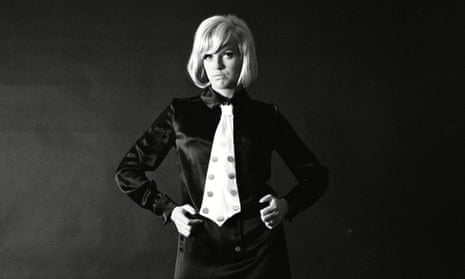
Annie Nightgale at the start of her career in the mid-1960s. When Annie Nightingale, who has died aged 83 , first approached the BBC in the hope of getting on the radio, she was instantly rebuffed. Her qualifications were inarguable: as a young journalist working in local […]
Still life by long-forgotten painter Clara Peeters could fetch £700,000
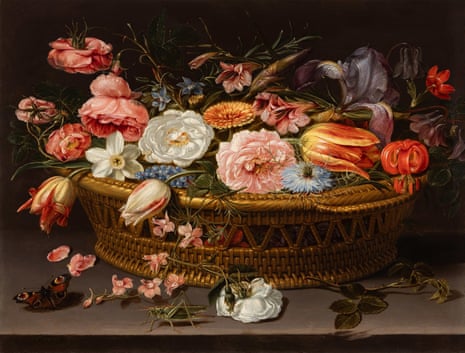
The untitled still life by the Flemish painter Clara Peeters has not been seen in public for almost 100 years. A lustrous painting of a basket of flowers by an early 17th-century female artist who was written out of art history for centuries is to be sold at auction […]
Female trailblazers of block-printed design – in pictures
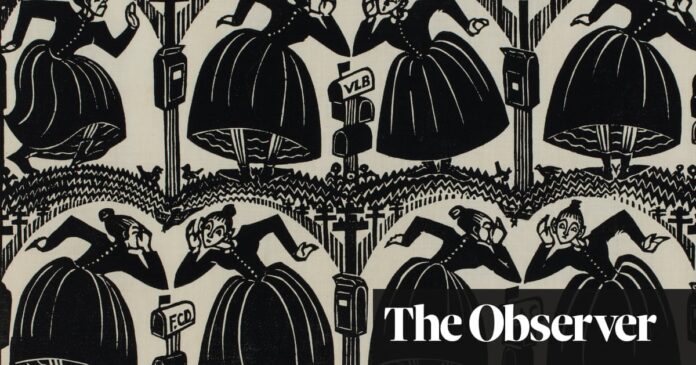
The Folly Cove Designers were a mid-century all-female collective based in Massachusetts, US. The illustrator and children’s book author Virginia Lee Burton Demetrios provided training to her neighbours in Folly Cove, and the women met monthly to exchange ideas for their designs, which they primarily block-printed on fabric. Now, writer Elena M Sarni has spent 13 years writing a book about them.