Polar priest: the church in the world’s northernmost town – a photo essay
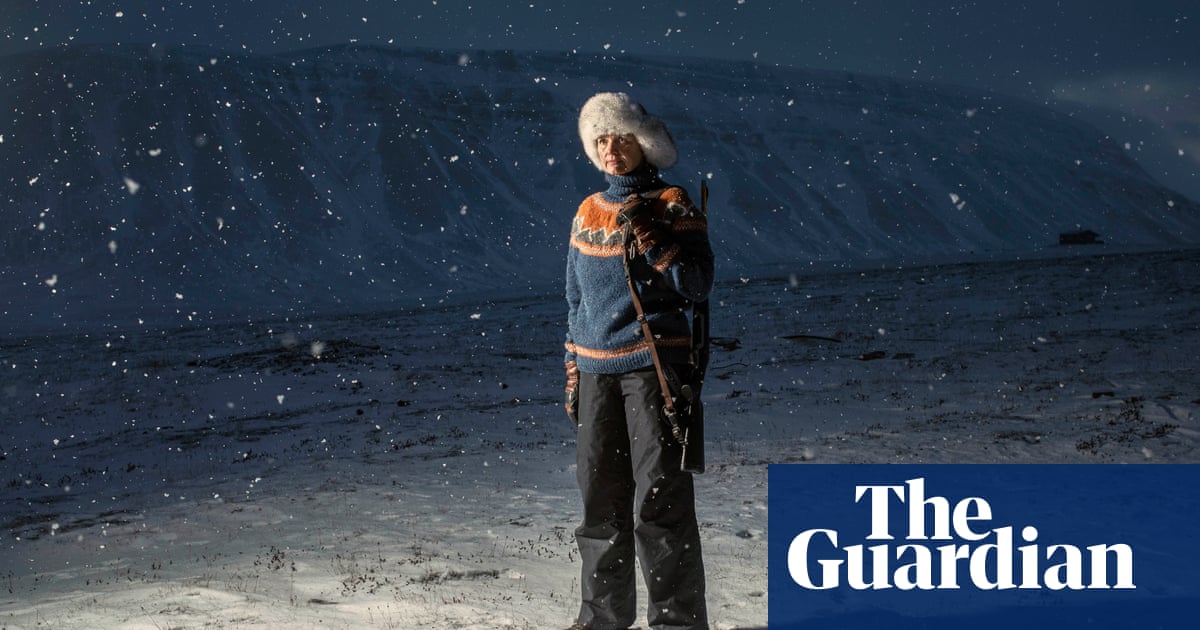
Located in the Svalbard archipelago in Norway, Longyearbyen is the world’s northernmost settlement. Here, winter temperatures range from -13 to -20C and inhabitants are prepared for two and half months of complete darkness in winter, the constant danger of polar bears, and avalanches.
The road to the cabin of Siv Limstrand, in Adventdalen Valley, an 18-mile-long valley east of Longyearbyen, during a brief moment of daylight
In this extreme environment, one priest has dedicated herself to assisting the local population with the huge changes they are facing.
Limstrand inside her cabin during the dark season. During this period, which lasts from mid-November to late January, the sun is always at least 6 degrees below the horizon and pitch darkness reigns
Siv Limstrand in the church of Longyearbyen wearing polar saddleback seal tailored clothing
Limstrand during a web interview broadcast on NK TV. The All Saints service was sent this year from Svalbard Church. Limstrand officiated, while cantor Jovna Zakharias Dunfjell was in charge of music
For the past century, the existence of this town, including its construction, has been centred on coal mining. Its small church, built in 1921, always played an important role in the community as a meeting place and venue for religious services and cultural gatherings. However, coal production in Svalbard will cease entirely in 2023 (Gruve 7 is the last mine of the Norwegian state-owned company that still produces coal) in favour of more sustainable energy, completely reshaping the economic and social landscape of the town. As Longyearbyen makes the transition, its inhabitants have priest Siv Limstrand as their spiritual guide, and the church has become an even more essential part of this community.
Limstrand visiting the miners and talking about the future of the community after the coalmine closes in 2023. Gruve 7 is located in Adventdalen, south-east of Longyearbyen
The mine opened in 1976 and is the only one still producing coal in Norway
As the central place for socialising in the town of just over 2,000 residents, Svalbard Church is open 24/7, both literally and spiritually. An inclusive space for the entire community regardless of nationality or denomination, it can, Limstrand believes, be a bridge-builder in a divided community. As she accompanies the town’s inhabitants through this time of transition, Limstrand thinks it is important that everyone is aware that the church is always open. As well as typical religious services, the church offers an open community space: the kitchen is used for offering coffee and tea, and other foods, and the space is also used for musical productions. It also hosts board-game nights and postnatal groups.
Limstrand performs a baptism
A student rehearses before a ceremony. Right, two young boys sitting in the church’s gathering space after the celebration of a baptism
Siv S Limstrand, pastor in Svalbard since 2019, previously worked at the Lutheran World Federation in Geneva. She was a student priest at NTNU and HiST in Trondheim for several years, working with people living with HIV/Aids in central Norway. She also worked as a street priest for the Trondheim City Mission and has been in charge of Our Lady’s Church, the outreach church in Trondheim.
Limstrand during a ceremony in the Longyearbyen graveyard to commemorate the deaths of seven Norwegian miners from Spanish flu in 1918. Today, people who die in Longyearbyen are flown to the Norwegian mainland for burial, because the natural heaving of the permafrost gradually brings coffins (and bodies) to the surface
Her work has always been forward thinking, with an emphasis on compassion, which is even more important as she helps the inhabitants of Longyearbyen face a multitude of modern-day challenges. In addition to economic shifts, Longyearbyen is being confronted by climate change-relate challenges due to its extreme northern latitude. The Arctic is warming twice as fast as any other part of the planet, with ice melting rapidly on land and at sea.
Limstrand preparing the church for the coming day
A student sitting on the floor of the church talks on the phone before helping other students organising a board game night. Right, the kitchen is used for offering coffee and tea and other foods. A child helps the priest’s assistant in the kitchen
A group of parents with their children, as music is played on the piano by Jovna Zakharias Dunfjell
Students playing boardgames in the church. During the dark season the church is a venue for all sorts of social activities
… we have a small favour to ask. We’d like to thank you for putting your trust in our journalism last year - and invite you to join the million-plus people in 180 countries who have recently taken the step to support us financially, keeping us open to all, and fiercely independent.
In 2021, this support sustained investigative work into offshore wealth, spyware, the 6 January insurrection, the corporate actors behind the climate crisis, and the abuses of Big Tech.
The new year, like all new years, will hopefully herald a fresh sense of cautious optimism, and there is certainly much for us to focus on in 2022 - the US midterms, the ongoing fight for racial justice, the next round in the struggle against the pandemic and a World Cup.
With no shareholders or billionaire owner, we can set our own agenda and provide trustworthy journalism that’s free from commercial and political influence, offering a counterweight to the spread of misinformation. When it’s never mattered more, we can investigate and challenge without fear or favour.
Unlike many other media organisations, Guardian journalism is available for everyone to read, regardless of what they can afford to pay. We do this because we believe in information equality. Greater numbers of people can keep track of global events, understand their impact on people and communities, and become inspired to take meaningful action.
If there were ever a time to join us, it is now. Every contribution, however big or small, powers our journalism and sustains our future. Support the Guardian from as little as $1 – it only takes a minute. Thank you.