Seonaid McIntosh: the British shooter with first gold of Games in her sights
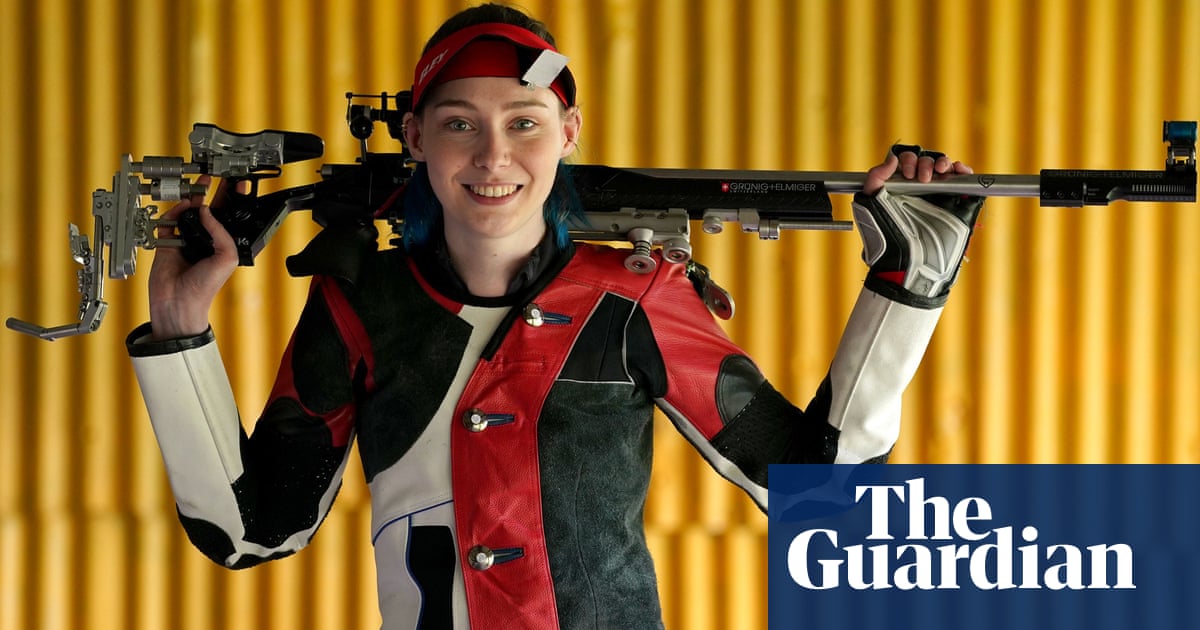
By the time the final member of Japan’s Olympic team has entered the stadium at the tail-end of Friday’s opening procession, Seonaid McIntosh – pronounced “show-ner” – will have set her alarm for a 5am start to catch the first bus from the Village on Saturday morning, in the hope of returning as the first gold medal winner of the Tokyo Games.
McIntosh, 25, is the most successful ever female British rifle shooter and will compete in both the 10m air rifle – which starts at 8am local time on Saturday – and the 50m rifle three positions (kneeling, prone and standing) the following weekend, the event in which she became the first British woman to win a gold medal at the annual world championships in 2019.
McIntosh was born into shooting as the daughter of Shirley, a gold medallist at the 1994 Commonwealth Games, and Donald, who also represented Scotland at the Commonwealth Games eight years later. She is also following in the footsteps of her older sister, Jennifer, the winner of two Commonwealth golds for Scotland in 2010, in a sport where the margin between gold and silver is often measured in fractions of a millimetre.
In addition to the mental pressure that comes with knowing that one wayward shot in the qualifying round could mean an early exit, shooting also places some surprising physical demands on competitors, given that one of the principal requirements is to remain as motionless as possible.
“Physically, you have to be fit enough to cope with a heavy training load,” Donald, who is also his daughter’s coach, says, “in positions that place a lot of strain on various parts of the body, particularly but not exclusively the back, neck, and shoulders, and in positions that are very asymmetrical.
“Muscles fatigue and tremor, so we try to make as much use as possible of the skeletal system to support the rifle. The point of aim of the rifle is always moving, even for truly elite athletes, and we spend a lot of time working on reducing both the size and speed of this movement.
“There’s also a huge psychological component, and the ability to deliver the skills developed in training effectively and consistently under pressure is absolutely key. There’s plenty of time to think between shots, and managing thoughts and emotions in competition is the thing that really separates the best shooters from the rest of the field.”
There are no telescopic sights or cross-hairs on McIntosh’s rifle, and to score a 10 with a single shot in the 10m event, she will need to hit a target that is 0.5mm wide. The bullseye, though, is also divided into decimals, with the top score of 10.9 awarded only for a perfectly central shot.
“Every decimal point matters,” Donald says. “You can be eliminated with just a 0.1 point difference, 0.25mm on a target 10m away.
“You can’t see any of these scoring rings, in fact they only exist in the computer that processes the signal generated by the pellet passing through the electronic target. All you can see through the sights is the circular blob of the black part of the target.”
… we have a small favour to ask. Tens of millions have placed their trust in the Guardian’s high-impact journalism since we started publishing 200 years ago, turning to us in moments of crisis, uncertainty, solidarity and hope. More than 1.5 million readers, from 180 countries, have recently taken the step to support us financially – keeping us open to all, and fiercely independent.
With no shareholders or billionaire owner, we can set our own agenda and provide trustworthy journalism that’s free from commercial and political influence, offering a counterweight to the spread of misinformation. When it’s never mattered more, we can investigate and challenge without fear or favour.
Unlike many others, Guardian journalism is available for everyone to read, regardless of what they can afford to pay. We do this because we believe in information equality. Greater numbers of people can keep track of global events, understand their impact on people and communities, and become inspired to take meaningful action.
We aim to offer readers a comprehensive, international perspective on critical events shaping our world – from the Black Lives Matter movement, to the new American administration, Brexit, and the world's slow emergence from a global pandemic. We are committed to upholding our reputation for urgent, powerful reporting on the climate emergency, and made the decision to reject advertising from fossil fuel companies, divest from the oil and gas industries, and set a course to achieve net zero emissions by 2030.
If there were ever a time to join us, it is now. Every contribution, however big or small, powers our journalism and sustains our future. Support the Guardian from as little as $1 – it only takes a minute. Thank you.