Scotland becomes first nation to provide free period products for all
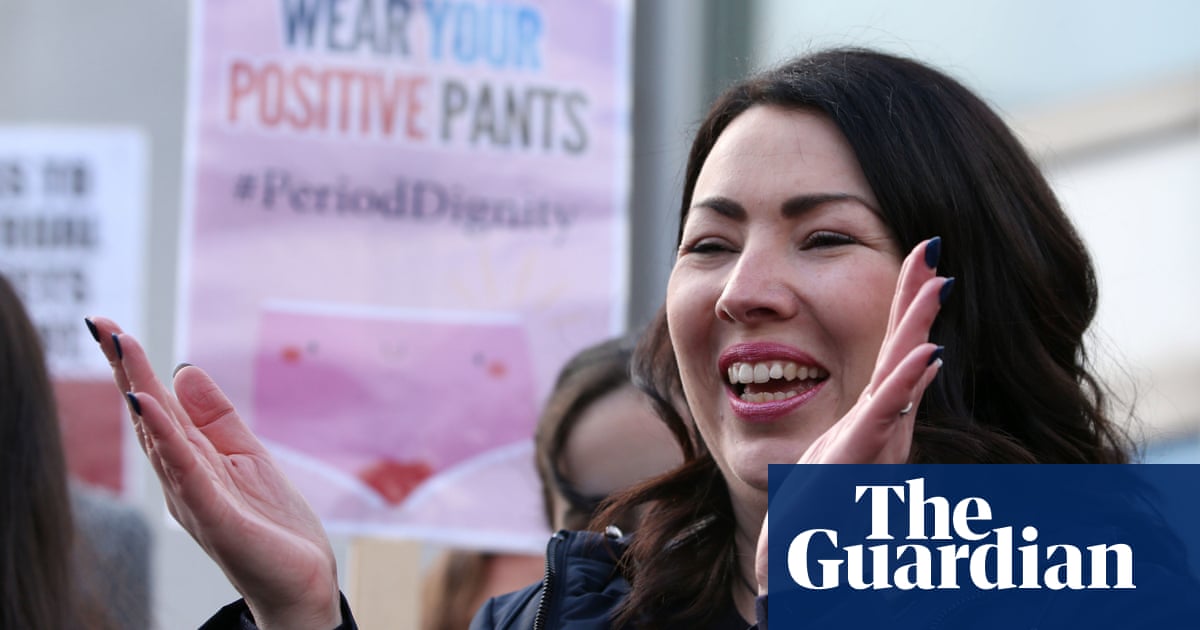
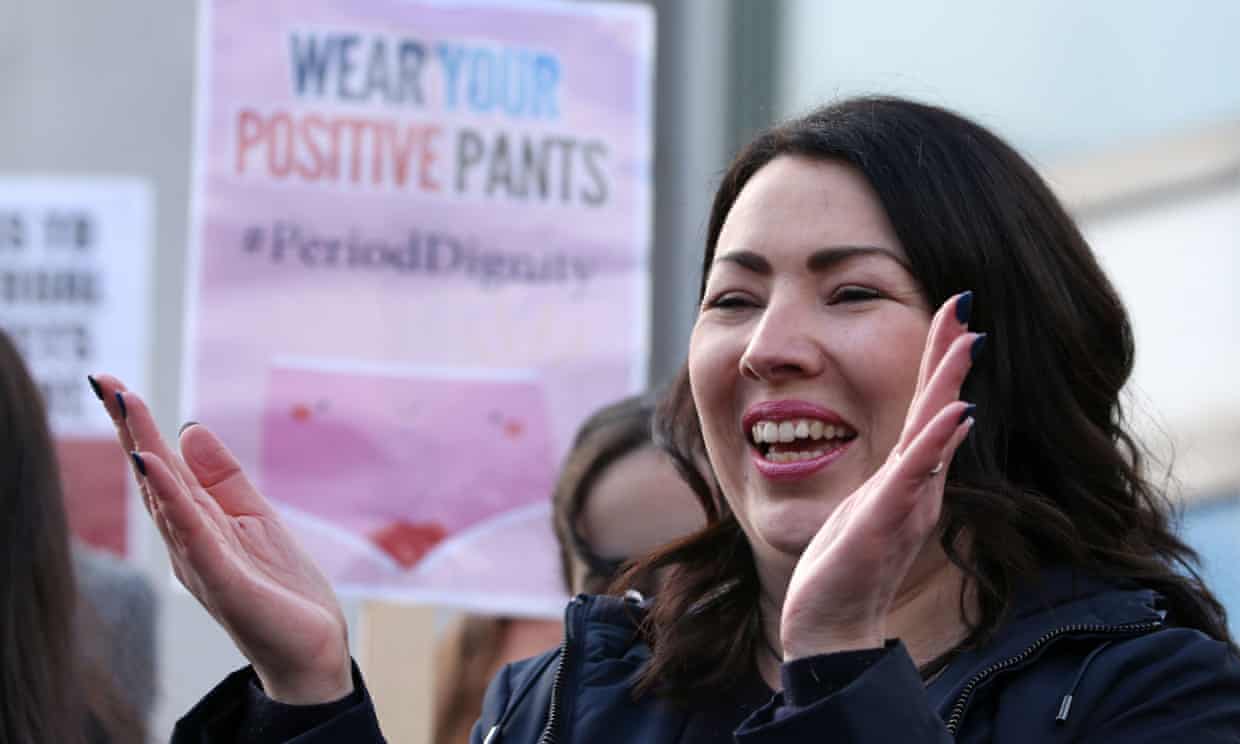
Scotland has become the first country in the world to provide free and universal access to period products after a four-year campaign that has fundamentally shifted the public discourse around menstruation.
The Period Products (Free Provision) (Scotland) Act, which passed unanimously through its final stage on Tuesday evening, will place a legal duty on local authorities to make period products available for all those who need them, building on the work of councils like North Ayrshire, which has been providing free tampons and sanitary towels in its public buildings since 2018.
The campaign – bolstered by nationwide grassroots support – was spearheaded by Scottish Labour’s health spokeswoman, Monica Lennon, who told the Guardian this was “a proud day for Scotland”.
Lennon said: “This will make a massive difference to the lives of women and girls and everyone who menstruates. There has already been great progress at a community level and through local authorities in giving everyone the chance of period dignity.
“There has been a massive change in the way that periods are discussed in public life. A few years ago there had never been an open discussion of menstruation in the Holyrood chamber and now it is mainstream. MSPs have enjoyed being a part of that, and it has encompassed the menopause, endometriosis, as well as the types of products we use and their sustainability.”
Period poverty – the struggle to pay for basic sanitary products on a monthly basis – has surged during the coronavirus pandemic, according to charities.
Earlier research by the grassroots group Women for Independence revealed that nearly one in five women had experienced period poverty, which has a significant impact on their hygiene, health and wellbeing. Women are estimated to spend an average of £13 a month on period products and several thousand pounds over a lifetime.
The scheme, which is estimated to cost about £8.7m a year, will not be means-tested. The Scottish government had initially challenged the universal provision, but switched to join cross-party support at the bill’s stage one debate in February. The SNP had been facing growing pressure from its own activists as well as from a broad coalition of trade unions and civil society groups galvanised by Lennon.
The legislation will also enshrine in law the requirement for schools, colleges and universities to provide the products for free, which was announced by first minister, Nicola Sturgeon, in 2017. This was then a world first, while the Scottish government has also funded a project in Aberdeen to deliver free period products to low-income households as well as a further £4m for councils to continue the roll-out to other public places.
In the interim, a number of individual businesses – restaurants, pubs and even football clubs – started providing free products independently. It has become increasingly common in Scotland to walk into a women’s toilet and find free products by the sinks, or with an honesty box.
Lennon said that campaigners across the world had been watching progress in Scotland very closely. “It’s an important message in the middle of a global pandemic that we can still put the rights of women and girls high up the political agenda.”
$0
contributed so far
$1,250,000
our goal
Since you're here ...
... we have a small favour to ask. Millions are flocking to the Guardian for open, independent, quality news every day. Readers in all 50 states and in 180 countries around the world now support us financially.
As we prepare for what promises to be a pivotal year for America, we’re asking you to consider a year-end gift to help fund our journalism.
We believe everyone deserves access to information that’s grounded in science and truth, and analysis rooted in authority and integrity. That’s why we made a different choice: to keep our reporting open for all readers, regardless of where they live or what they can afford to pay. This means everyone can be better informed and inspired to take meaningful action.
In these perilous times, an independent, global news organisation like the Guardian is essential. We have no shareholders or billionaire owner, meaning our journalism is free from commercial and political influence.
Amid the various intersecting crises of 2020 – from Covid-19, to police violence, to voter suppression – the Guardian has never sidelined the climate emergency. We keep the climate at the center of our reporting, and we practise what we preach: we no longer take advertising from fossil fuel companies, and we’re on course to achieve net zero emissions by 2030.
If there were ever a time to join us, it is now. Your funding powers our journalism. We’re asking readers to help us raise $1.25m to support our reporting in the new year. Every contribution, however big or small, will help us reach our goal. Make a gift now from as little as $1. Thank you.
